OLDEgypt – Objects of Life and Death
Project FED-tWIN
FED-tWIN is a federal research program of the Federal Public Service Science Policy Programming Service (BELSPO) with the aim of stimulating sustainable cooperation between ten federal science institutions and Belgian Universities through the funding of joint research profiles.
Duration
2024-2029
Description of the project
OLDEgypt is dedicated to the study, recontextualization, and publication of select pieces from the museum’s rich Egyptian collection. The project combines archaeological fieldwork, philological analysis, and historiographical research to uncover the original contexts and cultural significance of hundreds of ancient artefacts.
OLDEgypt’s approach is defined by three pillars:
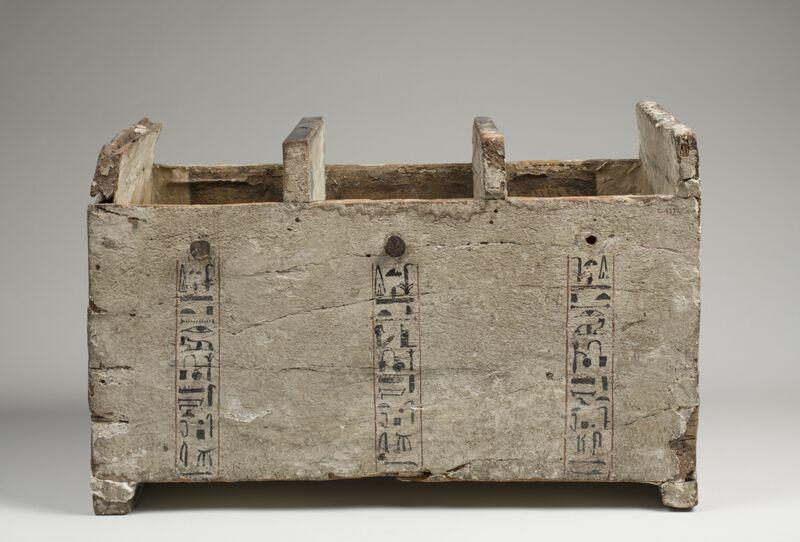
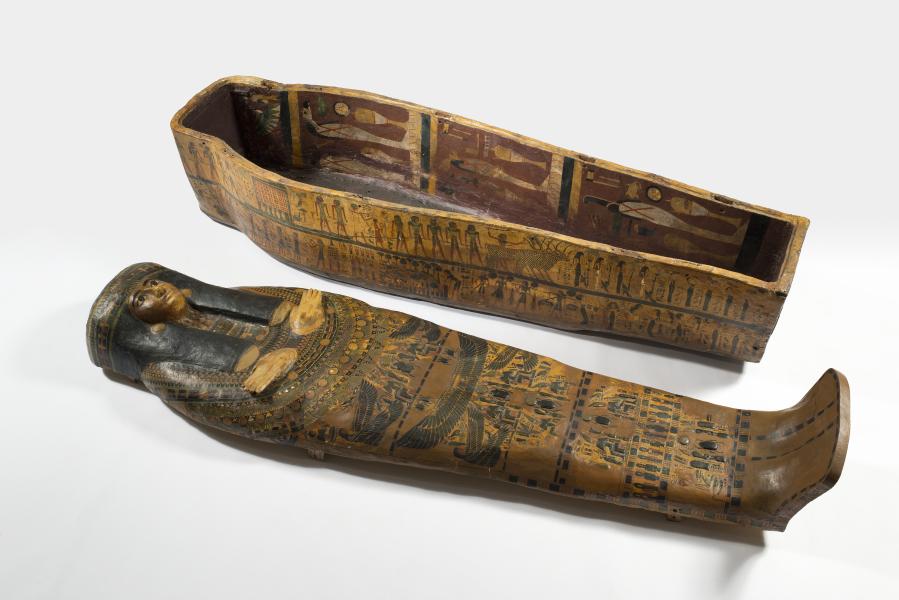
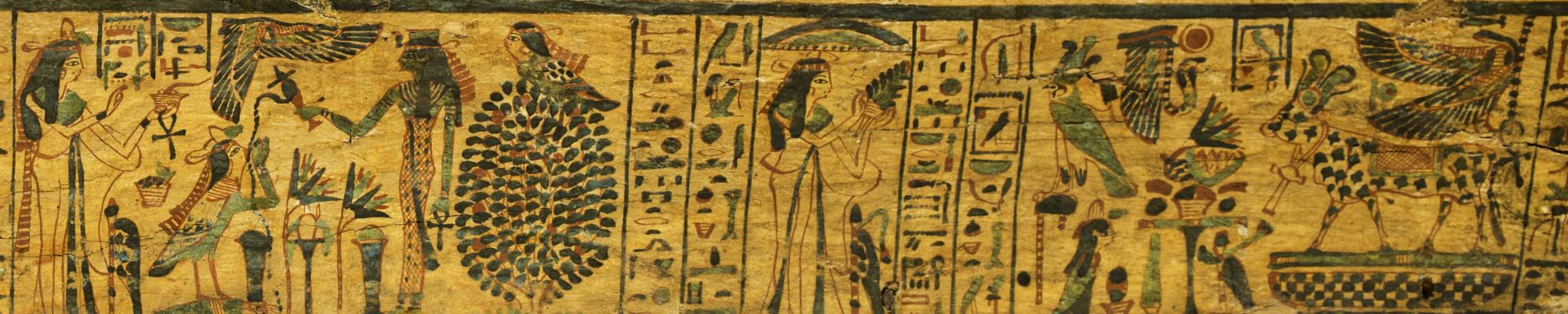
- Bab el-Gasus Coffins: The project includes the study of 21st Dynasty coffins (ca. 1076–1044 BCE), mummy boards, and other mortuary artifacts from the “Second Cache” of Deir el-Bahari near Luxor. Known as Bab el-Gasus (“Gate of the Priests”), it is the final resting place of 153 members of the clergy of Amun in Thebes. Shortly after the discovery in 1891, several objects from this extraordinary find were gifted to the RMAH by the Egyptian authorities. The coffins and mummy boards were recently restored by the Istituto Europeo del Restauro (Ischia, IT) which helped to identify earlier restoration and overpainting that had partially obscured the original decoration. These burial assemblages, reveal exceptional funerary iconography and provide new perspectives on religious beliefs and burial practices of the priests of Amun.
- Elkab Excavations: As one of Egypt’s longest-running archaeological missions, Elkab offers unique insights into ancient settlement dynamics. OLDEgypt continues to explore its continuous habitation from prehistoric times to the Middle Kingdom, contributing to broader debates on urbanism and socio-political development in ancient Egypt (learn more).
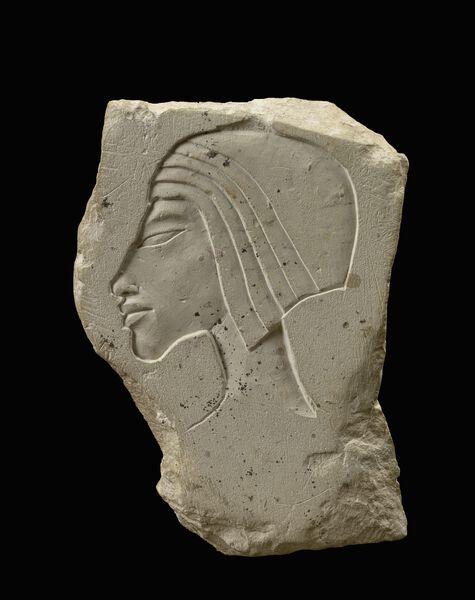
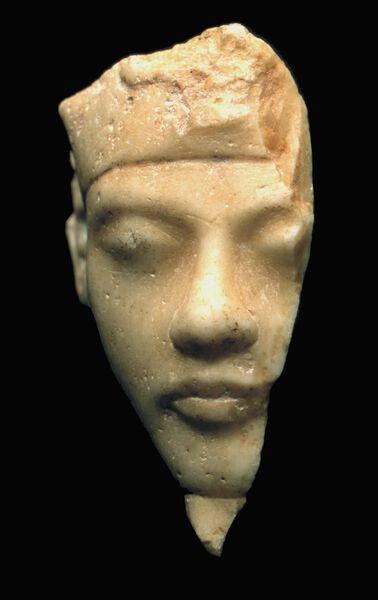
- Amarna Objects: OLDEgypt investigates nearly 300 artefacts from the ancient capital of Akhenaten, including talatat blocks, stelae, and diplomatic texts. By reconstructing their original archaeological assemblages, the project will shed light on the cultural and political landscape of one of Egypt’s most transformative periods.
OLDEgypt also supports the redesign of the Egyptian galleries at the RMAH, helping to ensure that exhibitions reflect current ethical and museological standards. Through digital platforms, publications, and educational outreach, the project makes its findings accessible to both scholars and the public.
Researcher
Prof. Dr. Stefan Baumann
s.baumann@kmkg-mrah.be
Coordinators
Dr. Natacha Massar (Royal Museums of Art and History)
Prof. Dr. Yann Tristant (KU Leuven)
Partners
Istituto Europeo del Restauro (Ischia, IT).