DELFTPAINT
Craft vs Art. Dutch earthenware paintings from the 17th to the 19th century in the collections of the Royal Museums of Art and History
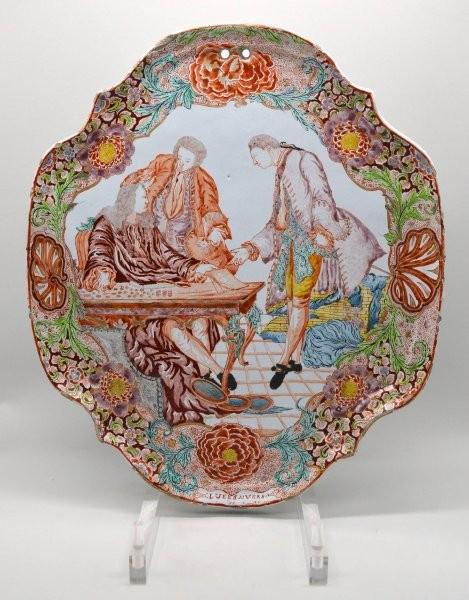
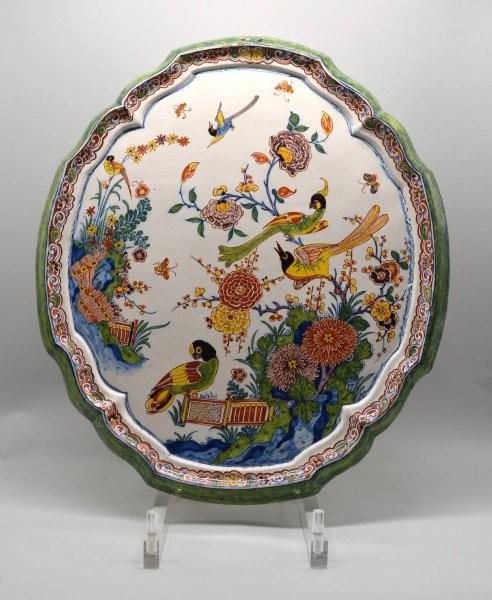
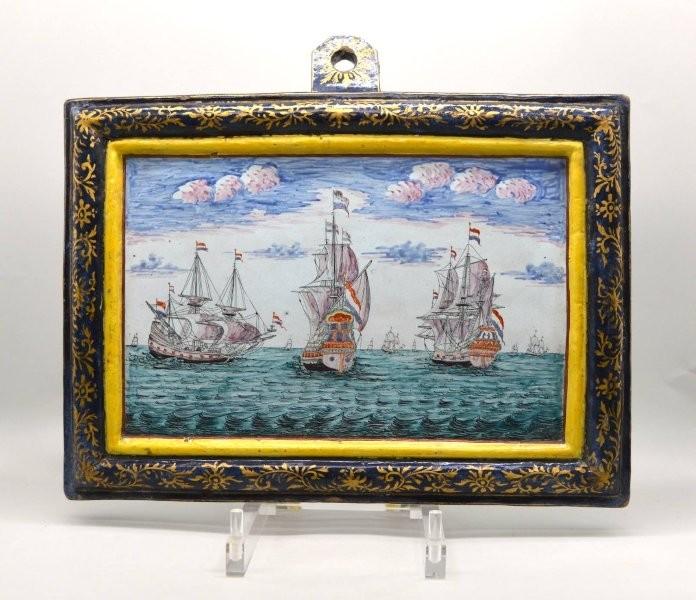
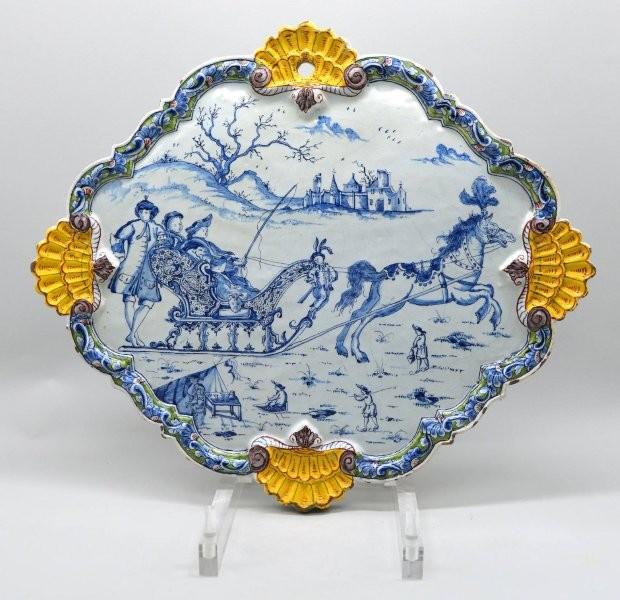
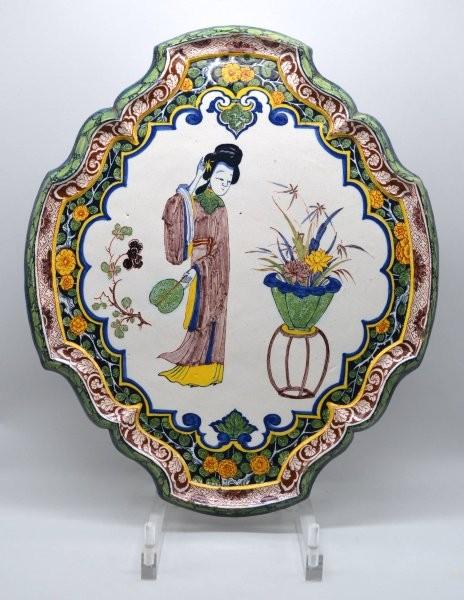
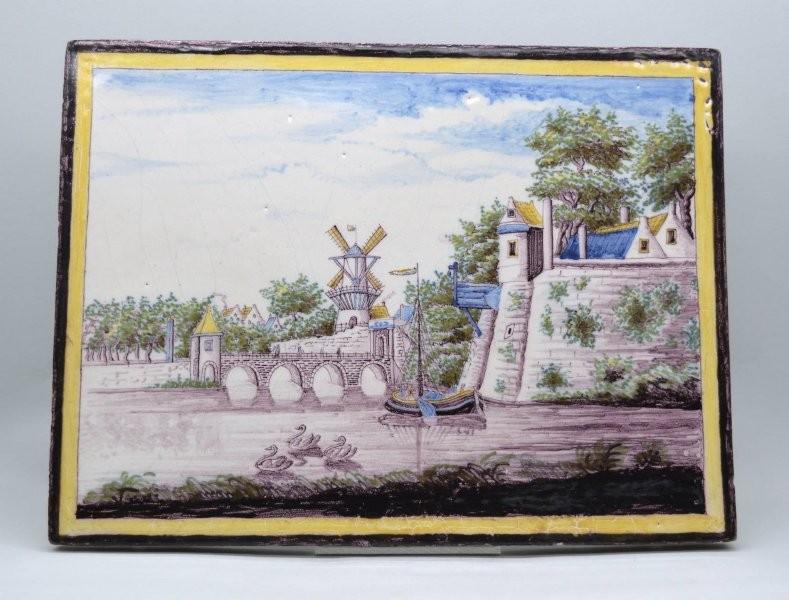
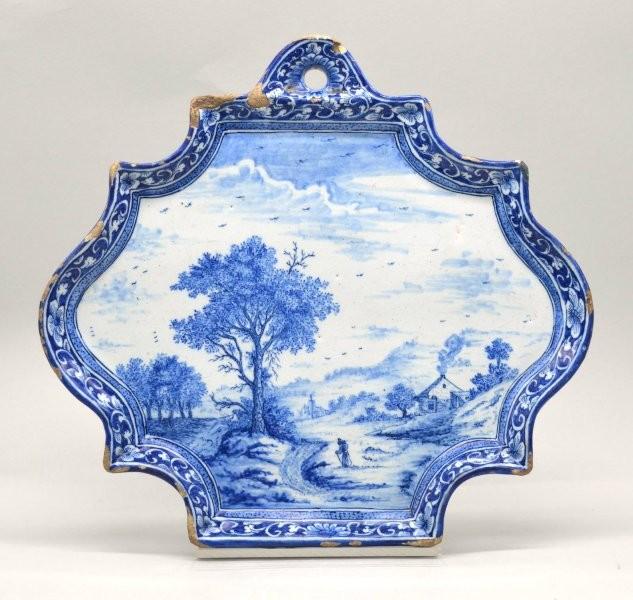
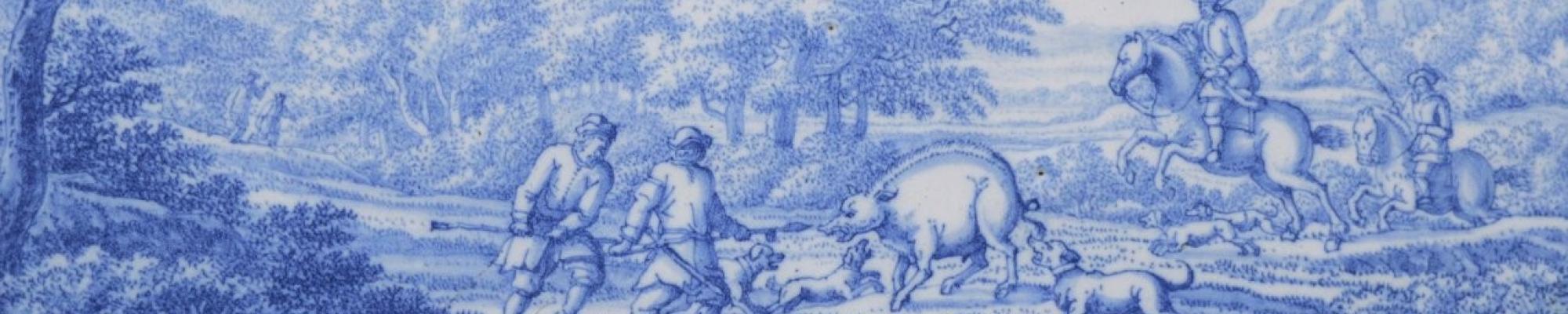
A Dutch landscape, an interior scene or a chinoiserie, painted not on canvas but on earthenware. From the 1640s onwards, Delft potteries produced small ceramic paintings designed to be framed and hung on walls like conventional paintings. In the 19th century, some were even attributed to Vermeer or Jan Steen.
These so-called porceleyne schilderijen (porcelain paintings) have received relatively little scholarly attention. The Royal Museums of Art and History (RMAH) preserve an important collection of these objects, most of which originate from the bequest of the collector Albert Evenepoel in 1911.
The DELFTPAINT project investigates these objects through an interdisciplinary approach combining art history, historical research, technical examination and physicochemical analysis. It seeks to understand how, by whom and for whom these objects, situated at the intersection of art and craft, were produced, used, circulated and eventually collected.
At a glance
- Duration: 1 January 2026 – 31 December 2029
- Corpus: 150 plaques and related objects from the RMAH collections, studied alongside examples from other European collections, including the Rijksmuseum in Amsterdam, Kunstmuseum Den Haag, the Victoria and Albert Museum in London and the Musée des Arts décoratifs in Paris.
- Team: Dr Valérie Montens and Eliot Duran (RMAH), in collaboration with researchers from KU Leuven.
- Partner: Museum Prinsenhof Delft.
Ceramic paintings
Painted earthenware plaques emerged in the Dutch Republic around 1640, during the Dutch Golden Age. This period witnessed an extraordinary flourishing of painting, drawing and printmaking, while the Dutch East India Company (VOC) imported large quantities of Asian porcelain.
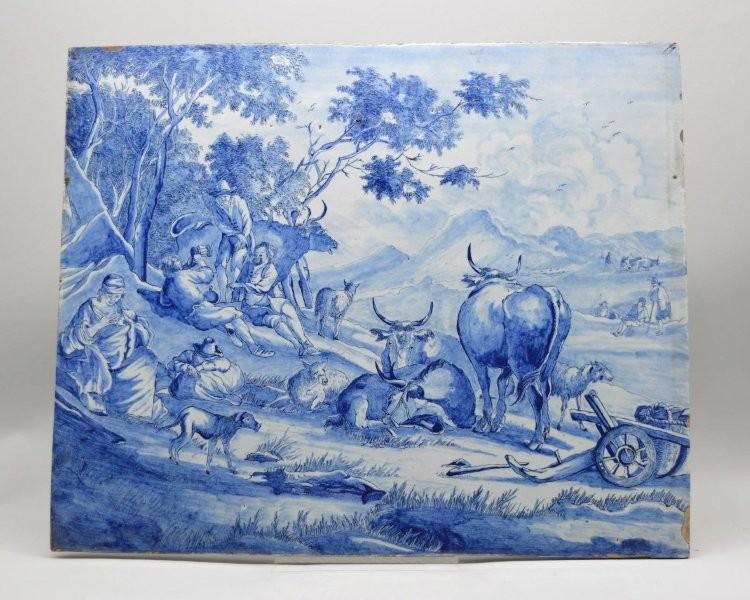
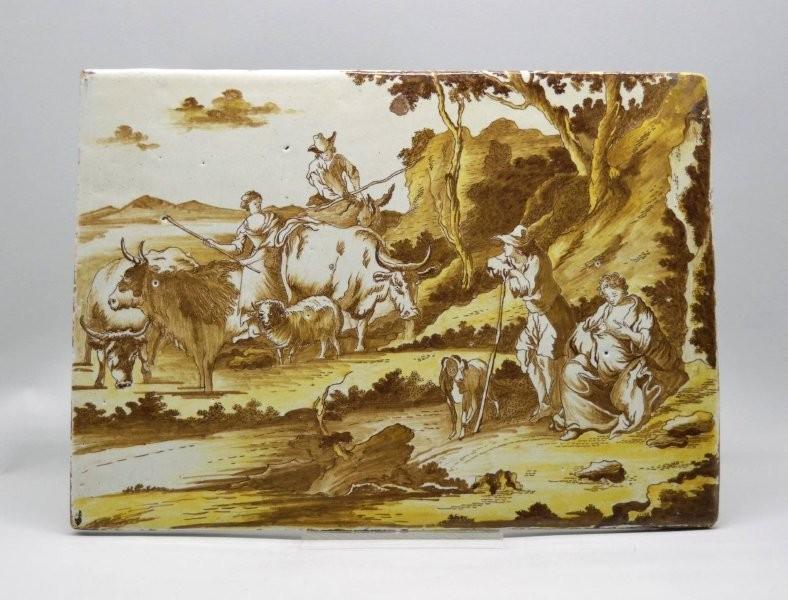
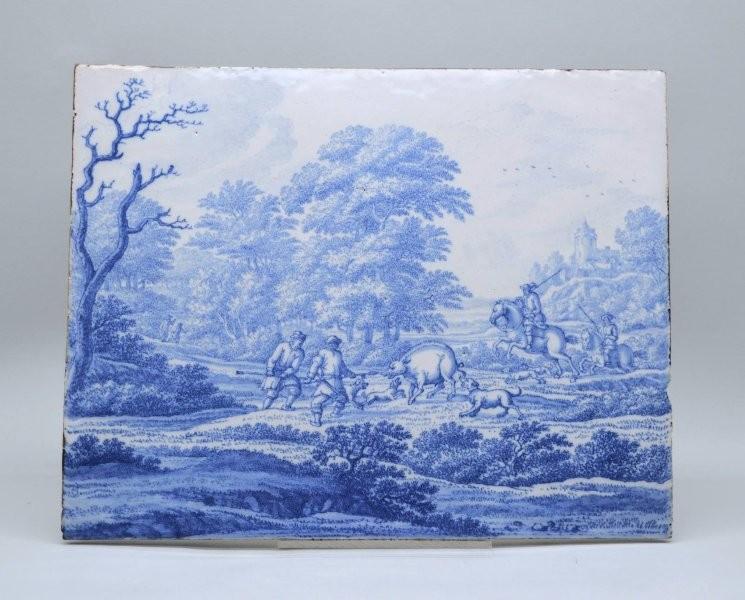
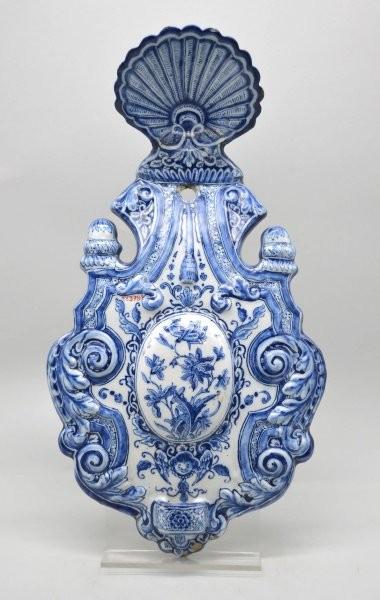
Produced mainly in Delft, but also in tile workshops in Amsterdam, Rotterdam and Utrecht, these plaques were made from a fired clay body covered with a white tin-glaze intended to imitate porcelain. They were then decorated in cobalt-blue monochrome or in polychrome. A thin, transparent lead glaze, known as kwaart, gave the surface additional lustre.
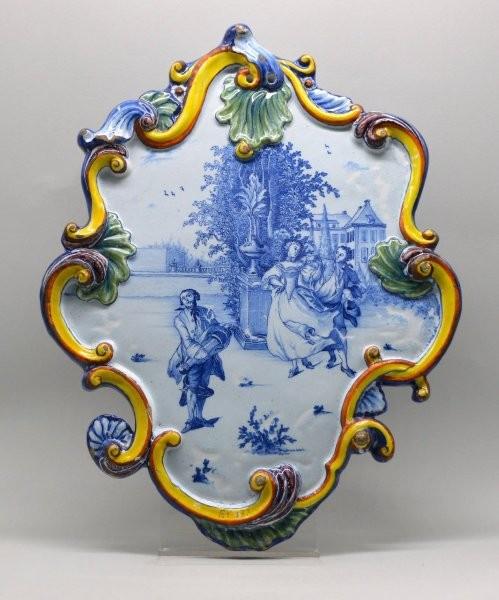
Unlike tile panels, which are much better documented, these plaques were made in a single piece and conceived as independent pictorial works. In the 17th century, they generally took the form of large, flat plaques glazed on the front and sometimes on the reverse, designed to be inserted into frames. In the 18th century, plaques with shaped or scalloped outlines appeared, their moulded borders serving as integral frames. Bevelled edges, suspension holes and glazed backs provide valuable clues to how these objects were displayed and used.
Their iconography is remarkably diverse, encompassing landscapes and seascapes, interior scenes, religious, allegorical and historical subjects, as well as chinoiserie motifs that were highly fashionable at the time. Their decoration was often based on prints derived from paintings or drawings by both well-known and anonymous artists. Illustrated books and pattern books also served as sources of inspiration.
The painters responsible for these plaques remain largely anonymous. A few names are known, however, including Frederik van Frytom, who was renowned for his landscapes in blue monochrome.
An understudied corpus
In the 19th century, the collector and author Auguste Demmin claimed that Jan Steen, Willem van de Velde and even Vermeer himself had painted on Delftware. The art historian Henry Havard soon challenged these attributions, but interest in the plaques had already been aroused. Major collectors of Delftware, including Albert Evenepoel in Brussels, incorporated them into their collections.
Scholarly interest, however, remained limited. Only one exhibition has been devoted exclusively to these objects, held in Saint-Omer in 1989. Research has focused primarily on identifying the prints that served as models for their decoration. The artisans, materials and production techniques remain largely unexplored, and physicochemical analyses have been carried out on relatively few plaques. At the RMAH, only a small number of objects have been examined in detail.
DELFTPAINT aims to deepen our understanding of these objects by examining them from multiple perspectives and situating them within their broader historical, artistic and technical contexts.
Research questions
DELFTPAINT addresses five main areas of enquiry.
Production and materials. How were the plaques shaped, glazed, painted and fired? Which raw materials and recipes were used? How did techniques and material compositions evolve between 1640 and 1800, and across different production centres?
Workshops and painters. Is it possible to distinguish between individual potteries, workshops and painters, and to establish more precise dates for the plaques? Were they decorated exclusively within the potteries, or also at home by independent painters? The project will pay particular attention to the role of women, whose contribution to this production has so far remained largely undocumented.
Models and sources of inspiration. Which prints, paintings and drawings served as models for the decoration? What connections existed between Delftware painters and artists working in Delft?
Uses and markets. Who purchased these plaques, and at what price? How were they displayed in domestic interiors alongside paintings and other ceramic objects? Did they circulate beyond the Dutch Republic?
Taste, collecting and authenticity. How did these plaques become sought-after collectors’ items from the 19th century onwards, and what value did collectors attach to them? What criteria can help distinguish older plaques from later productions and imitations?
Methodology
DELFTPAINT adopts an interdisciplinary approach combining art history, the history of technology, materials analysis and cultural history. Particular attention is given to the objects preserved in the RMAH collections, which will be studied alongside examples from other European collections to situate them within broader networks of production, circulation and use.
Each plaque will undergo morphometric and technical documentation, together with an assessment of its conservation condition. Microscopic examination of manufacturing traces and decorative features, high-resolution imaging and 3D modelling will help document the plaques’ physical characteristics and production processes.
The ceramic bodies, glazes and pigments will be characterised using a range of non-destructive and micro-destructive analytical techniques, including micro-X-ray fluorescence (μXRF), laser ablation inductively coupled plasma mass spectrometry (LA-ICP-MS), Raman spectroscopy and isotope analysis. These methods will help characterise the materials and recipes used, and investigate their chronological and geographical variations.
Written and visual sources will also be examined to identify workshops and artisans, reconstruct patterns of distribution and consumption, investigate the reception of the plaques and explore their relationships with other artistic media.
All technical and historical data will be integrated into a standardised database designed to support systematic comparisons and quantitative analysis.
By combining these approaches, the project aims to establish a robust typology of the plaques, identify production groups and situate these objects within the broader context of European material and visual culture in the 17th and 18th centuries.
Impact and dissemination
Through its interdisciplinary approach, DELFTPAINT seeks to generate new knowledge about the earthenware plaques preserved in the RMAH collections and to situate them within the broader context of ceramic production in the Low Countries during the 17th and 18th centuries.
The project will generate new data on manufacturing and decorative techniques, materials, workshops and artisans, as well as on the use, circulation and reception of these objects from their creation to the present day. Material and stylistic analyses will contribute to the development of a typology, the identification of production groups and the formulation of appropriate conservation strategies.
The results will be shared with different audiences. Researchers and heritage professionals will be reached through a study day and scholarly publications. Educational and practice-based collaborations will engage students and emerging artists. The wider public will be able to discover the project through an exhibition, an accompanying catalogue and online access to the collection.
These activities will enhance the visibility and understanding of the collection, strengthen its heritage value and highlight its scientific significance at both national and international levels.
Team
Dr Valérie Montens, Project Coordinator and Curator of the European Ceramics, Glass and Stained Glass Collections at the RMAH. She holds a PhD in History from the Université libre de Bruxelles (ULB) and specialises in European material culture and collecting practices.
Eliot Duran, Researcher at the RMAH, art historian (ULB) and amateur ceramicist.
The project also involves Gaëlle Silvant, PhD researcher, and Dr Alicia Van Ham-Meert, Professor in the Department of Earth and Environmental Sciences at KU Leuven.
Advisory committee
Femke Diercks (Rijksmuseum, Amsterdam); Kate van Lookeren Campagne (University of Amsterdam); Jo Tollebeek (KU Leuven); Alicia Van Ham-Meert (KU Leuven); Joris Van Grieken (Royal Library of Belgium, Brussels).
Partner
Museum Prinsenhof Delft, in collaboration with Dr Esther van der Hoorn, Curator of Decorative Arts.
Funding
DELFTPAINT is funded by the Belgian Federal Science Policy Office (BELSPO) through the P4Science programme. The programme aims to strengthen the scientific expertise of Belgium’s Federal Scientific Institutions by fostering interdisciplinary and transdisciplinary collaboration with other institutions.
Contact
Would you like to find out more about the project or get in touch with the research team? We would be delighted to hear from you.
Eliot Duran:e.duran@kmkg-mrah.be
Dr Valérie Montens:v.montens@kmkg-mrah.be