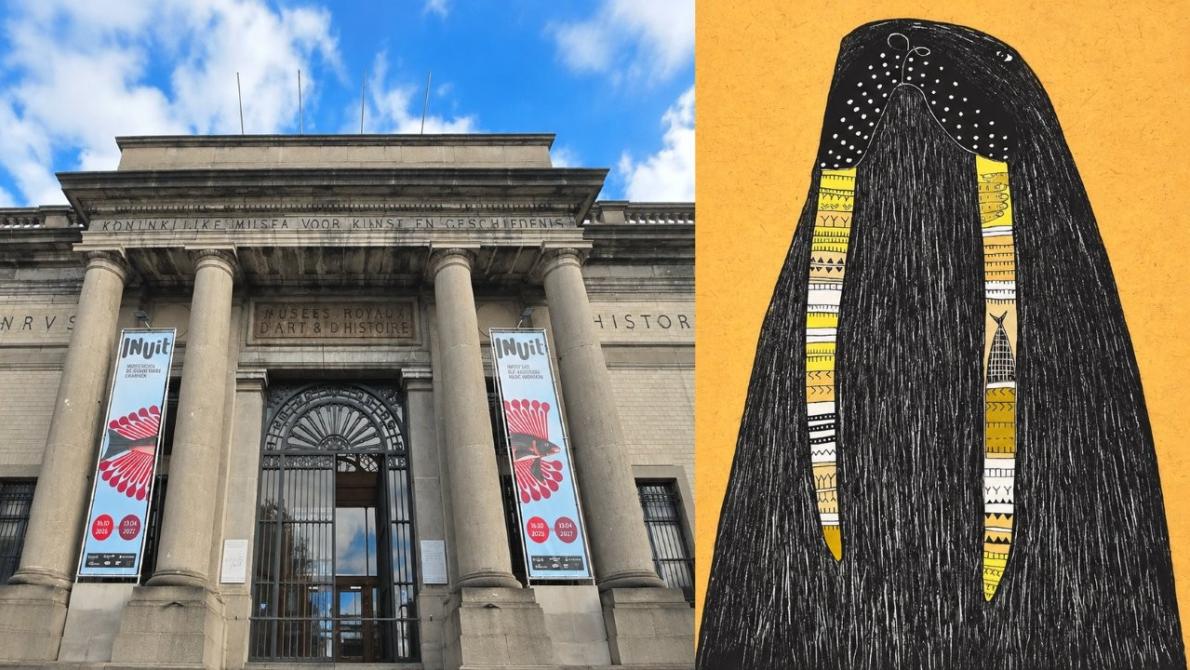
On the occasion of the exhibition Inuit. Impressions of the Canadian Far North the Art & History Museum is organising a series of six lectures exploring various themes related to the exhibition.
« Nous n’avons qu’eux pour vivre »: la place des animaux dans la culture inuit, hier et aujourd’hui - lecture in French
Vladimir Randa, spécialiste de la culture inuit et directeur de la collection « Arctique » aux Éditions Peeters
“We have only them to live”. To focus solely on this observation made by the Inuit themselves risks reducing the relationship between hunters and game to the realm of subsistence and its material aspects alone. However, the relationship between humans and animals also encompasses an intellectual and spiritual dimension. In addition to advanced hunting techniques, a vast wealth of detailed knowledge about the fauna has enabled the Inuit to meet all their needs.
Animals are also omnipresent in the Inuit’s imagination. In the era of shamanism, animals were central to all considerations, and significant traces of this can still be found in contemporary thought. They also feature in all forms of art, both ancient and contemporary.
Practical information
Sunday, 14.03.27 from 10:30 to 12:00
The lectures are open to the public with a valid museum admission ticket (for the collections or an exhibition) and will take place in the conference room at Museum A&H.
The lecture will be given in French.
See also
- 08.11.26 A&H Sunday (1/6) – Inuit : Valse des esprits et métamorphoses : les sources de la résilience du chamanisme des Inuit du Nunavut (Canada) by Frédéric Laugrand
- 13.12.26 A&H Sunday (2/6) - Inuit : Fêtes hivernales hier et aujourd’hui chez les Inuit canadiens by Guy Bordin
- 10.01.27 A&H Sunday (3/6) – Inuit : Habiter l’Arctique : architecture et identité inuit au Canada by Esther Descamps-Goyet
- 14.02.27 A&H Sunday (4/6) – Inuit : Les mots de l’art inuit by Marc-Antoine Mahieu
- 11.04.27 A&H Sunday (6/6) – Inuit : Des productions des premiers habitants de l'Arctique à l'art inuit contemporain by Maryse Saraux
Need more information? Ask your question via public@kmkg-mrah.be
With the support of The Friends of the RMAH